How to Stage an Ocean View Home in Laguna Beach
How should you stage an ocean-view home in Laguna Beach to maximize your sale price?
Staging an ocean view home in Laguna Beach means protecting sightlines to the water, maximizing natural light, and extending the living experience onto decks, terraces, and patios, not simply decorating rooms. The highest-impact steps are clearing surfaces near windows, replacing heavy window treatments with sheers or nothing at all, floating furniture away from the view corridor, staging outdoor spaces as functional living areas, and scheduling photography after the morning marine layer clears, typically mid-to-late morning depending on the home's orientation. Done right, staging keeps buyer attention exactly where it belongs: on the coastline.
By Victor Vasu & Suzanne Vasu | May 27, 2026
If you're selling an ocean view home in Laguna Beach, the most expensive staging mistake you can make is competing with your own view.
That's what happens when sellers add too much, position furniture wrong, leave heavy drapes on the windows, or let the deck sit neglected while putting careful energy into the kitchen. The ocean is your primary selling feature. Every staging decision should be evaluated by one question: does this protect the view, or does it fight it?
Here's how I walk my sellers through it.
This Market Has Its Own Staging Logic
Laguna Beach has roughly seven miles of coastline, terrain shaped by foothills and ocean-facing slopes, and a setting that makes views, natural light, and the relationship between interior rooms and outdoor spaces more consequential than in almost any other Southern California market. If you're still deciding which part of Laguna Beach fits your lifestyle, the difference between canyon and coast living in Laguna Beach shapes this question significantly, but once you're selling an ocean-view property, the staging logic applies across the board.
The climate reinforces it. With temperatures typically running from the mid-60s to around 80 degrees year-round, the line between indoor and outdoor living is essentially optional. Buyers touring a Laguna Beach home aren't just evaluating the interior, they're deciding whether they can picture a Tuesday morning on that terrace and a Sunday sunset from the primary suite, the same instinct behind understanding what living in Laguna Beach is actually like before they ever make an offer.
There's also a timing factor specific to coastal listings. Marine-layer clouds often peak around sunrise and can linger into mid-morning, so the same home can look dramatically different at 8 a.m. versus 11 a.m. That matters for showings, but it matters even more for photography.
The rooms that deserve the most staging attention are predictable: the main living area, primary bedroom, dining area, kitchen, and any outdoor space that carries a water view. According to the 2025 Profile of Home Staging from the National Association of Realtors, these are the rooms agents most often prioritize. In a view property, that logic is especially sound, if a room supports the view story, it should be staged with care.
Clearing Space for the View
Clutter does more damage in an ocean-view home than it does anywhere else. It doesn't just make a room feel busy, it competes directly with the feature that drove every buyer through the door.
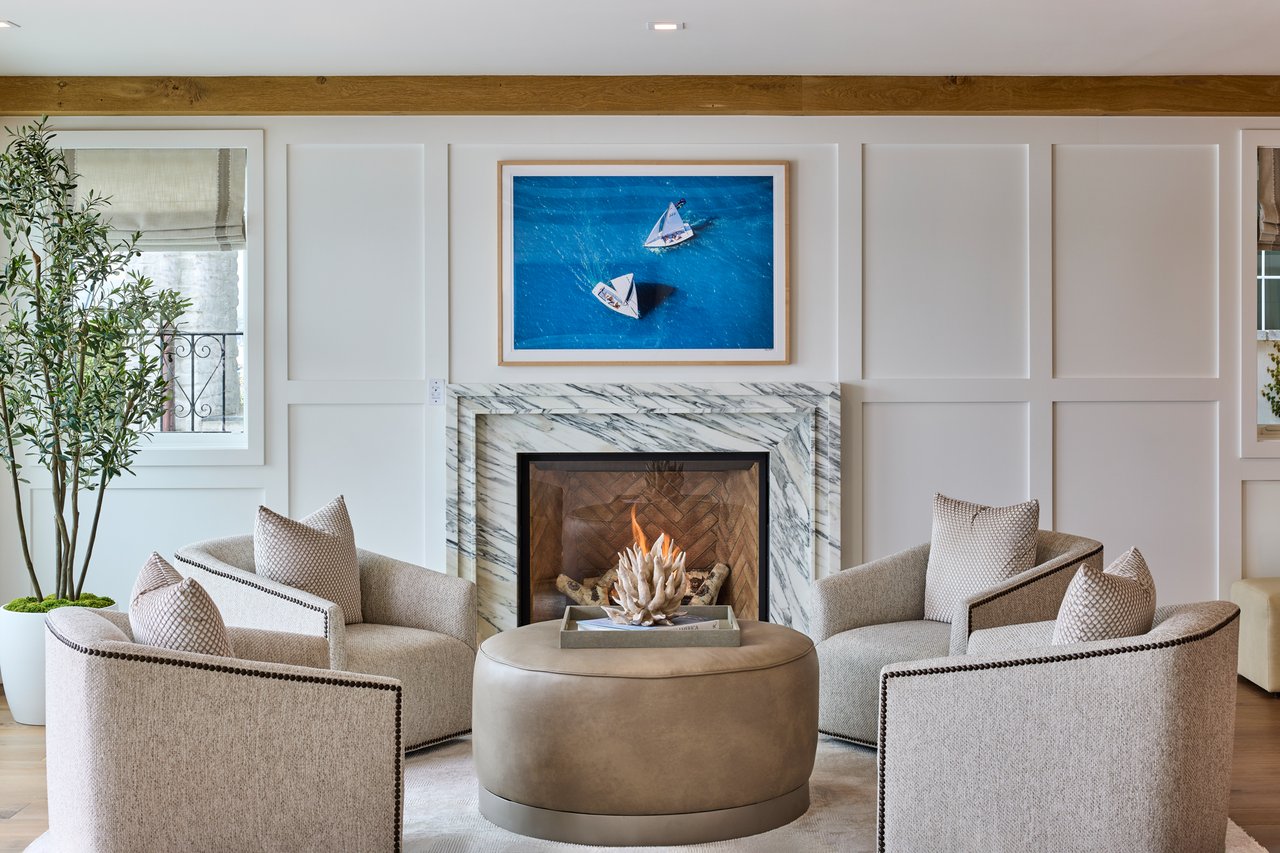
Walk through every room and evaluate each surface from the vantage point of the main window or glass door. Anything that interrupts the eye's path to the water weakens the impact of the backdrop. That means pulling excess furniture, bold-pattern textiles, personal items, large plants near window walls, and oversized accessories that sit in the foreground of the view.
A quieter room reads as larger, brighter, and more expensive. It also gives buyers the visual space to project themselves into the home, which is exactly what you want at this stage of their decision.
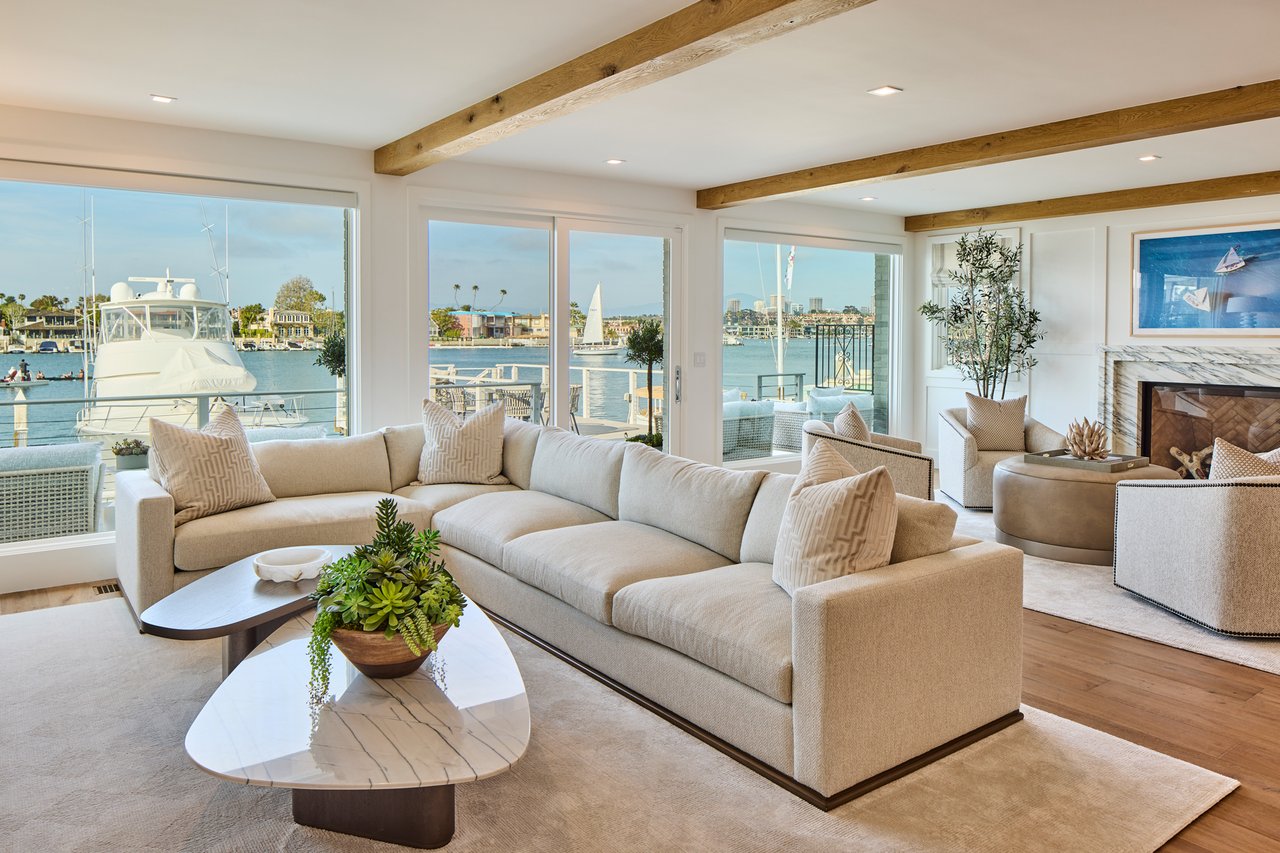
Window treatments matter more than most sellers expect. Heavy drapes or dark custom panels can make a well-designed room feel closed off and dated. For most view properties, sheers or no window coverings at all are the stronger choice. Open blinds fully before every showing. Remove screens if they noticeably soften the view or reduce light. Keep glass and frames clean, buyers notice.
Furniture placement should follow the sightlines, not the walls. Floating pieces away from the perimeter and keeping doorways between rooms open and unobstructed keeps the eye moving toward the ocean rather than stopping at a sofa back or a cabinet edge. Practical choices that improve the reading:
- Angle seating toward conversation and the windows simultaneously
- Leave clear, unobstructed paths to decks and patios
- Avoid tall pieces near view corridors
- Use mirrors selectively to bounce light deeper into the room but only when positioned to reflect the water, not a wall
The goal is a room that feels open, calm, and connected, not a room that feels decorated.
Outdoor Staging Is Not Optional in Laguna Beach
This is where I see sellers leave the most value behind.
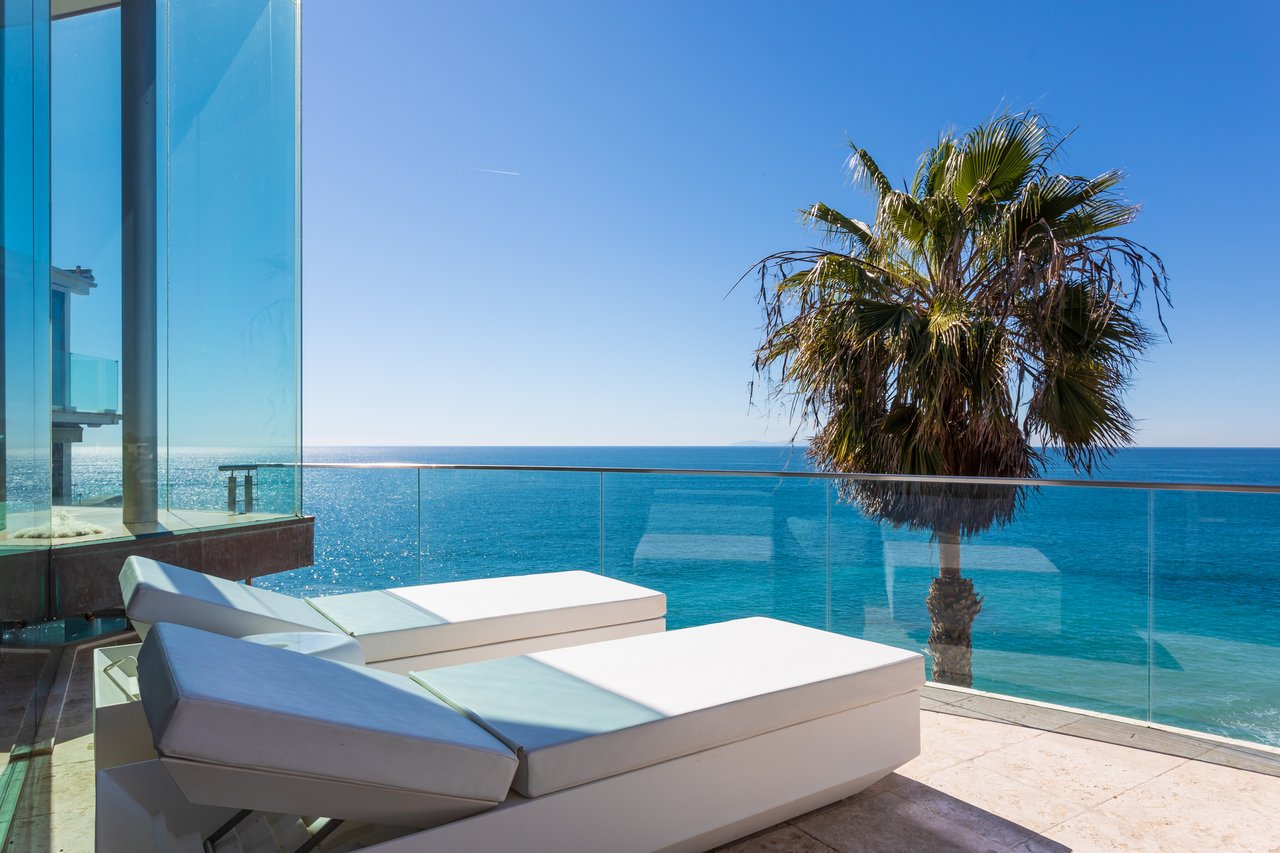
In a coastal climate where outdoor living is available twelve months a year, a neglected deck or terrace tells buyers the seller wasn't paying attention, and it breaks the narrative of the lifestyle they came to see. Treat every outdoor area that carries a view or connects to a living room or primary suite as an extension of that room. Stage it the way you'd stage a sitting area.
The 2025 NAR staging data confirms that outdoor and yard areas are among the spaces agents actively prepare, and Zillow recommends staging patios, decks, and view-facing seating as part of a complete presentation strategy. In Laguna Beach, this isn't optional guidance. It's a requirement.
What this looks like in practice:
- Clean all hardscape surfaces, pavers, concrete, stone
- Arrange a complete, simple seating group if space allows
- Replace worn or mismatched cushions
- Keep railings and glass panels streak-free
- Remove anything that reads as storage or neglect
- Add a few restrained accents rather than many small objects
If the outdoor area visually extends the living room, buyers should feel that connection the moment they step through the door. That's the staging outcome you're building toward.
Photography Timing Is Part of Your Strategy
A lot of sellers treat photography as a final step after everything else is done. For a view property in Laguna Beach, it's a strategic decision that starts before the first box gets moved.
NAR data ranks photography as highly important in luxury listings, and Zillow recommends using a professional photographer who understands how to capture interiors and views without distortion, the same discipline behind preparing a Newport Beach home for photography, video, and AI search, just applied to a Laguna Beach view lot. For this market, I'd add one more requirement: a photographer who understands coastal light and knows what marine-layer haze looks like on camera.
Because morning clouds often linger past sunrise, early-morning shoots can produce flat, washed-out images, the opposite of what you paid to present. Most Laguna Beach homes photograph best after mid-morning, once the light has cleaned up. The exact timing depends on the home's orientation and the day's conditions, so confirm this with your photographer before booking.
Before the shoot, lock in these details:
- Confirm all outdoor spaces are fully staged
- Remove screens if they interfere with view clarity or light
- Open blinds fully and set window treatments exactly as they'll appear in showings
- Discuss view-corridor shots with the photographer before they start
- Account for sky conditions and orientation when selecting shoot time
A strong photographer preserves window detail, accurate room scale, and the visual value of the water from inside the home. Poor photography flattens the listing's most valuable feature and costs you before a single buyer walks through the door.
Should you stage every room? In most cases, no. Full-house staging doesn't always deliver proportionate return. The strongest ROI comes from the rooms that explain how the home lives: its scale, flow, and connection to the ocean-facing lifestyle. If a secondary room has a view, opens to a terrace, or clarifies a layout that might otherwise confuse buyers, it's worth staging. Otherwise, stay selective, the same discipline that applies when deciding on renovating before selling versus selling as-is.
Empty, furnished, or lightly staged? Most ocean-view homes in Laguna Beach show best somewhere between the extremes. An empty home makes it difficult for buyers to judge scale and daily living. An over-furnished home can obscure the architecture and work against the view. A clean, edited presentation, enough furniture to give buyers context, not enough to crowd the setting, is typically the strongest position.
Your specific configuration depends on the home's layout, your existing furniture, and the current buyer pool. That's exactly the kind of conversation I have with every seller before any decisions get made.
Frequently Asked Questions
Which rooms should you prioritize when staging an ocean-view home in Laguna Beach?
Start with the rooms that directly support the view story: the main living area, primary bedroom, dining area, kitchen, and any outdoor space that connects to the water. Secondary rooms are worth staging only if they carry a view, open to a terrace, or help buyers understand the layout in a meaningful way. Stage strategically, not automatically.
When is the best time to photograph a Laguna Beach ocean-view listing?
Most Laguna Beach homes photograph best after the morning marine layer clears, typically mid-to-late morning, depending on the property's orientation and that day's conditions. Early-morning shoots often produce flat, hazy images. Work with a photographer who has experience with coastal light and discuss timing before the shoot date, not the morning of.
Should you remove window screens before showing an ocean-view home in Laguna Beach?
If the screens noticeably soften the view or reduce light clarity, yes, for both photos and live showings. A clean, unobstructed view of the water is one of the clearest signals that the property was prepared thoughtfully. It's a small detail with an outsized effect on buyer first impressions.
Is it better to sell a Laguna Beach ocean-view home empty or staged?
Most sellers benefit from a clean, lightly staged presentation rather than either extreme. An empty home makes it difficult for buyers to gauge scale and room proportion. An over-furnished home can obscure the architecture and compete with the view. The strongest position is a minimal, intentional presentation, enough to show how the spaces live without getting in the view's way.
What's the most common staging mistake sellers make in ocean-view homes?
Competing with the view. Oversized furniture in front of windows, bold textiles that pull the eye inward, cluttered window sills, and neglected outdoor areas are all common and all avoidable. The view is your primary selling feature. Every staging decision should either support it or stay out of its way.
The difference between a Laguna Beach listing that generates early momentum and one that sits is usually preparation, not price, which is also the case behind price per square foot understates a luxury home's real value in this market. Buyers in this market are experienced. They notice whether the deck is cared for. They notice whether the light in the photos matches what they see in person. They notice whether the room layout respects the view or ignores it.
Staging well doesn't mean adding more. It means removing friction so buyers can connect with what they came to see.
If you're getting ready to sell an ocean-view home in Laguna Beach, reach out and we'll build a tailored staging and presentation strategy together. 949-677-5268
[email protected] | vasuteam.com
About Victor Vasu & Suzanne Vasu
Victor Vasu & Suzanne Vasu are Global Real Estate Advisors with Pacific Sotheby's International Realty, serving coastal Orange County, Corona del Mar, Newport Beach, and Laguna Beach. With 35 years in the market, recognized by the Wall Street Journal for sales volume, and direct experience working with CoreLogic, the nation's largest real estate analytics provider, Victor brings an analytical edge that most agents in this market cannot match. He has represented hedge funds, family offices, and private clients on properties ranging from $3M coastal condominiums to a $30M Lido Isle estate, and has successfully sold over 1,300 expired and cancelled listings that other agents couldn't close. DRE #01015709 & #01002943. Contact him at [email protected] or 949-677-5268.