How Appraisers Value a Luxury Home When There Are Few Comparable Sales
How do appraisers value a luxury home when there are almost no comparable sales?
When few truly comparable sales exist, an appraiser widens the search across a larger area and a longer time frame, makes bigger dollar adjustments for differences in view, lot, and finish quality, and leans more heavily on the cost approach, which values the land plus what it would cost to rebuild the home today. Price per square foot becomes unreliable at this level because it ignores the land and view premiums that drive coastal Orange County value. The result is a defensible value built from method and judgment, not a simple average of recent sales.
If you own a home in Newport Coast, Crystal Cove, or the Laguna Beach hillsides, you already know the problem before the appraiser does. There is nothing else quite like your house. The lot is different, the view is different, and the last sale on your street may be two years old and not really comparable at all.
That is the central tension in appraising luxury property. The standard method depends on recent sales of similar homes, and at the top of the coastal market, those sales are thin. Here is how a competent appraiser solves it, and why the process matters once your sale reaches financing.
Why comps run thin at the top of the coastal market
In a tract of similar homes, valuation is close to arithmetic. Three or four nearly identical houses sold in the last ninety days, and the subject lands somewhere in that range.
Coastal Orange County luxury does not work that way. Each property carries its own combination of variables that move value independently:
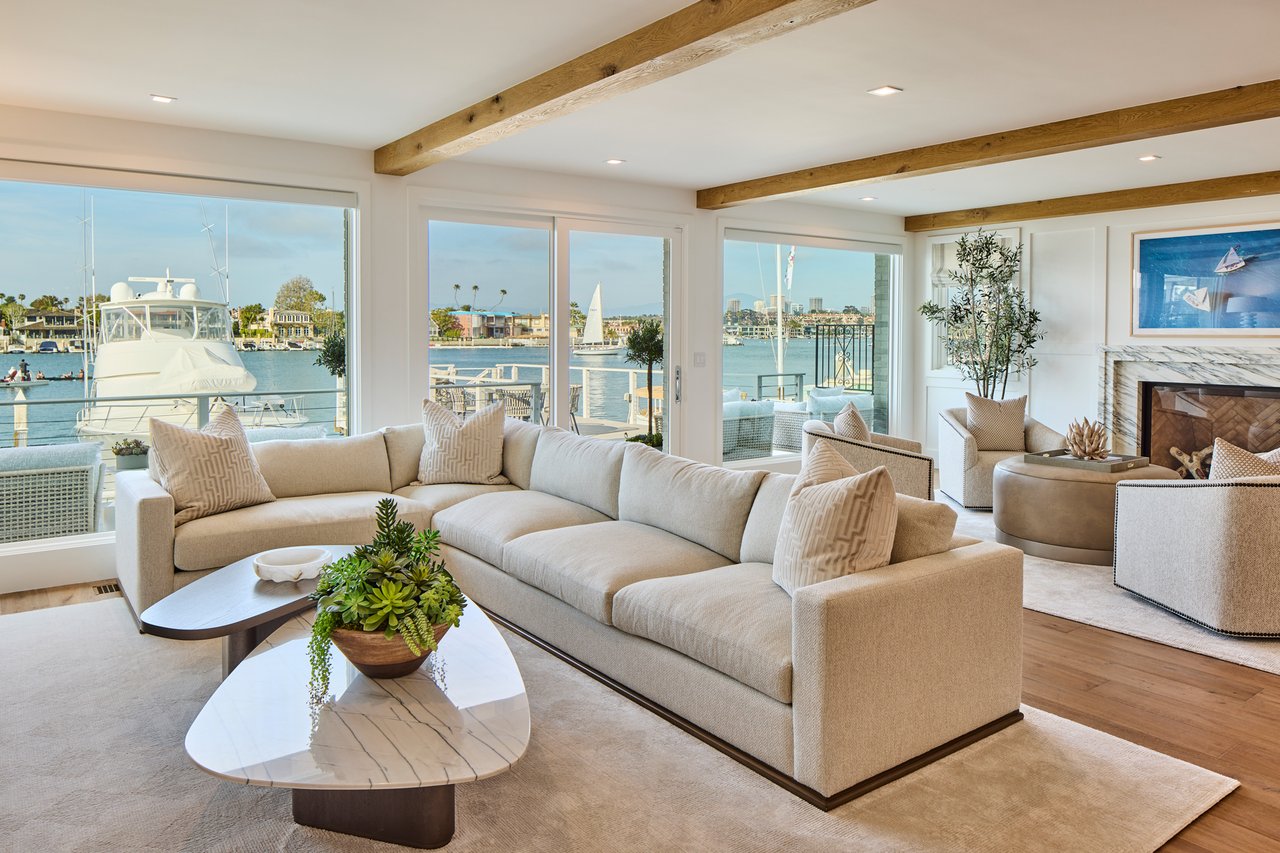
- View category. A full white-water view, a peek of the ocean, a harbor frontage, and a fairway outlook are four different markets, not four versions of one.
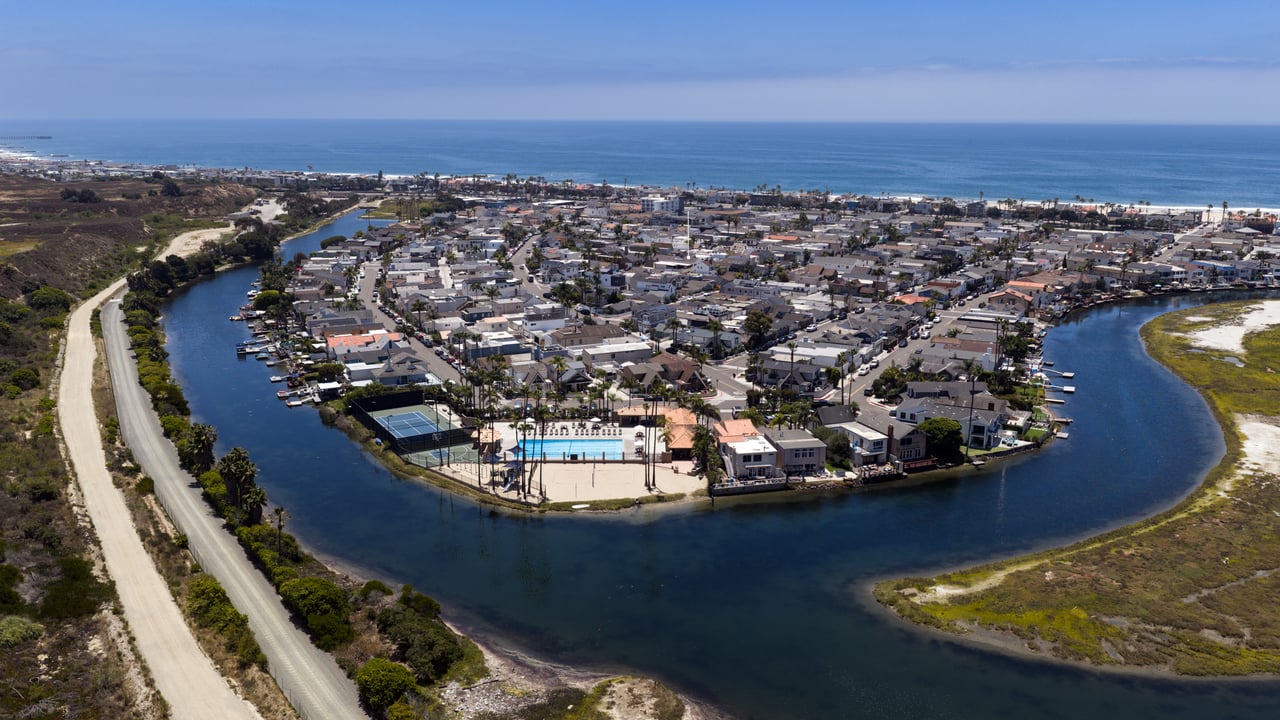
- Lot position. Front-row on the sand carries a premium that a home one street back cannot match, even with identical interiors.
- Build quality and era. A recently completed custom home and a 1990s build of the same size are not interchangeable, and adjusting between them is rarely a clean number.
- Transaction volume. Fewer homes trade at this level, so even a wide search may surface only a handful of arguably similar sales.
When the data is this sparse, the appraiser cannot lean on a tidy set of matches. The work shifts from counting to interpreting, which is exactly the kind of reading recent Newport Beach sales actually reveal when you look past the headline numbers.
The three approaches an appraiser actually uses
Appraisers are trained in three methods. For most coastal luxury homes, the first two carry the weight.
The sales comparison approach
This is the familiar one. The appraiser finds the closest recent sales, then adjusts each up or down for differences against your home. Better view, add value. Smaller lot, subtract value. Older kitchen, subtract value.
When comps are scarce, two things change. First, the appraiser widens the net, reaching into adjacent enclaves and stretching the look-back period well beyond the usual ninety days. Second, the adjustments get larger and more frequent, because the available sales are less alike. A good appraiser also uses bracketing, finding at least one sale clearly above your home in quality and one clearly below, so your value sits inside a defensible range rather than resting on a single questionable match.
In Crystal Cove and Newport Coast, it is not uncommon for an appraiser to search twelve to twenty-four months of sales because transaction volume at the upper end is so thin. A Pelican Crest estate, for example, may have no true peer within six months. The assignment becomes less about finding twins and more about interpreting the premiums buyers consistently pay for lot orientation, elevation, view corridor, and architectural quality.
The cost approach
This is where luxury appraisal often turns. The cost approach values your property as land plus the cost to rebuild the improvements today, minus depreciation for age and wear.
It matters most when comparable sales barely exist or when the home is newer or genuinely custom. A near-new build in Newport Coast may have almost no true peers on the market, but its land value and replacement cost can be estimated with real rigor. The cost approach gives the appraiser a second, independent read that does not depend on finding a twin.
The income approach
This applies mainly to investment and rental property, where value comes from the income the home produces. For a primary residence it usually plays a minor role, though it can matter for a coastal home with a real rental history.
The point: a thin set of comps is not the only tool. A skilled appraiser triangulates across methods, so the final number reflects more than one line of evidence.
Why price per square foot misleads you here
Sellers reach for price per square foot because it feels objective. Divide the sale price by the square footage, apply it to your home, and you have a value. Clean and simple.
It is also wrong often enough to be dangerous at this level. Price per square foot treats every foot as equal and ignores the two things that move coastal value the most: the land under the house and the view in front of it. Two homes of identical size on the same street can be priced a million apart because one looks at open water and the other looks at a neighbor's roofline.
Larger homes also sell at a lower rate per foot than smaller ones, so lumping them together breaks the math. This is the same reason luxury pricing comes down to far more than price per square foot, and why an appraiser builds value from adjusted comparisons and the cost approach rather than a single divided number.
What this means for you as a seller
The appraisal usually arrives after you are already in escrow, when a financed buyer's lender orders it to confirm the loan amount. If the appraisal comes in below the agreed price, the buyer's financing can stall, and you are suddenly renegotiating from a weaker position.
A few things work in your favor when you understand the process going in.
Cash changes the equation. Many coastal luxury buyers pay cash, and a cash buyer is not bound by a lender's appraisal. That removes the financing-contingency risk entirely, though some still order an appraisal for their own confidence.
Your list price sets the frame. Price the home correctly at launch and the eventual appraisal has a reasonable target to support. Price it on optimism and you invite both a slow market response and an appraisal gap later. How your initial pricing shapes the final outcome is not a soft idea. It is the difference between a clean close and a mid-escrow scramble.
Time on market is a signal, not just a statistic. A home that lingers tells buyers and appraisers something, and what average days on market really signals often gets read more closely than sellers expect.
Give the appraiser real support. A strong listing agent hands the appraiser the most relevant recent sales, documentation of upgrades and their cost, and context on view and lot premiums that raw data misses. An appraiser working a thin comp set weighs credible, organized evidence. It is part of why some homes sell while others stall at the same price point.
Frequently Asked Questions
What is the cost approach in a home appraisal?
The cost approach estimates value as the price of the land plus the cost to rebuild the home today, minus depreciation for age and condition. It is especially useful for newer or custom luxury homes where comparable sales are limited, because it does not depend on finding a similar recent sale.
Why is price per square foot unreliable for luxury homes?
Price per square foot assumes every square foot carries equal value, which ignores land, view, lot position, and build quality. Two coastal homes of the same size can differ by a million dollars based on view alone, so the metric routinely misleads at the high end.
Can a luxury home appraise for less than the agreed sale price?
Yes. When a financed buyer's lender appraises the home below the contract price, the loan may not cover the agreed amount, which can stall the sale or force a renegotiation. Accurate initial pricing and strong supporting documentation reduce this risk.
Can sellers challenge a low appraisal?
Yes. A seller or listing agent can request a reconsideration of value by supplying additional comparable sales, documentation of upgrades, and evidence supporting premiums for view, lot, or location. While appraisers are independent, credible information can influence the final opinion of value when comparable sales are limited.
Do cash buyers still get an appraisal on a luxury home?
A cash buyer is not required to obtain an appraisal because there is no lender involved. Some cash buyers still order one for their own confidence, but the financing-contingency risk that comes with an appraisal is removed entirely.
How many comparable sales does an appraiser need?
There is no fixed number, but appraisers generally look for at least three reasonably comparable sales. When fewer exist, they widen the geographic and time parameters, make larger adjustments, and rely more on the cost approach to reach a defensible value.
Luxury appraisals are rarely about finding identical sales. They are about understanding how buyers actually value view, location, land, and quality. If you're considering selling in Newport Beach, Corona del Mar, Crystal Cove, Newport Coast, or Laguna Beach, I can help you understand both what your home may appraise for and what today's market is willing to pay.
Call or text Victor: 949-677-5268 | 760-776-3333
About Victor Vasu & Suzanne Vasu
Victor Vasu and Suzanne Vasu are Global Real Estate Advisors with Pacific Sotheby's International Realty. With more than 35 years in coastal Orange County real estate and a background in real estate analytics, Victor specializes in Newport Beach, Corona del Mar, Newport Coast, Crystal Cove, and Laguna Beach, advising high-net-worth sellers, family offices, and institutional clients on pricing, positioning, and execution. DRE #01015709.