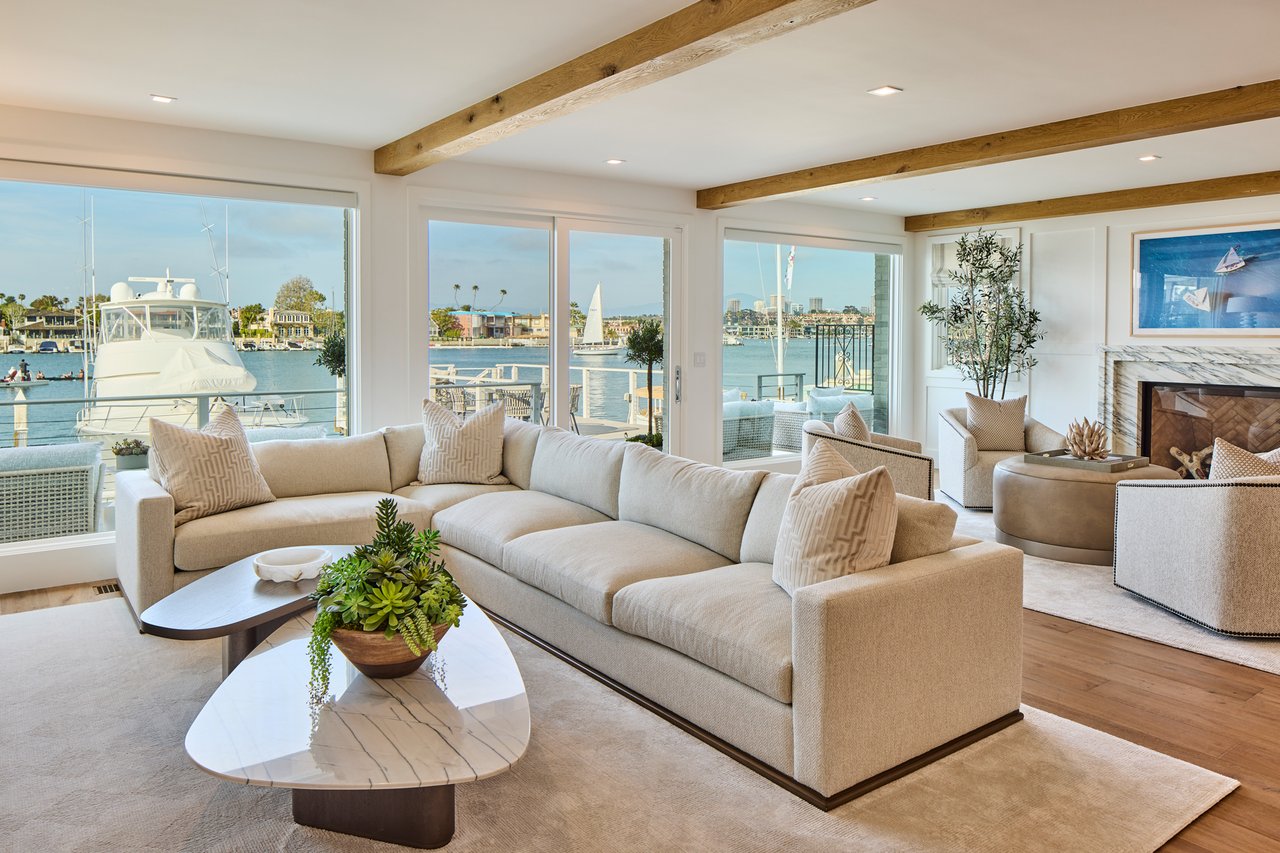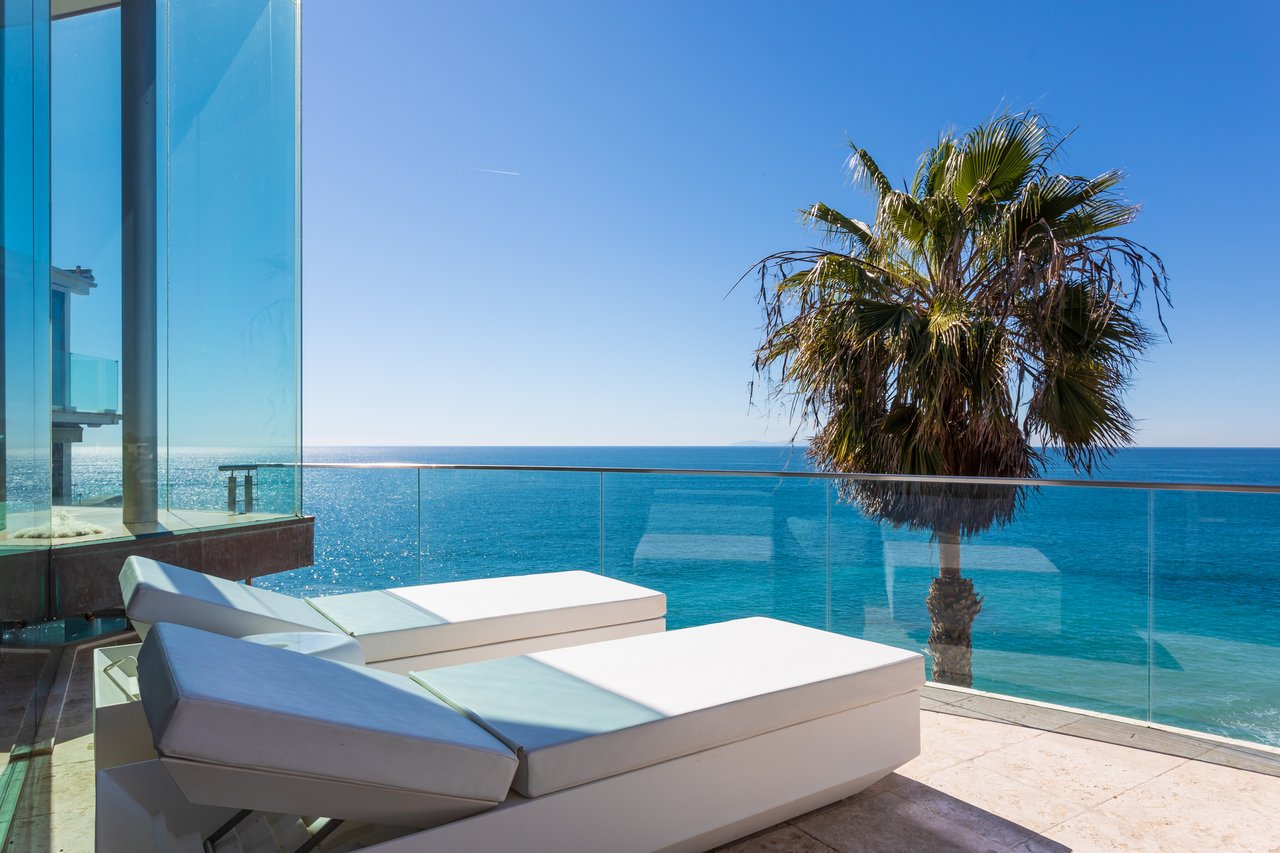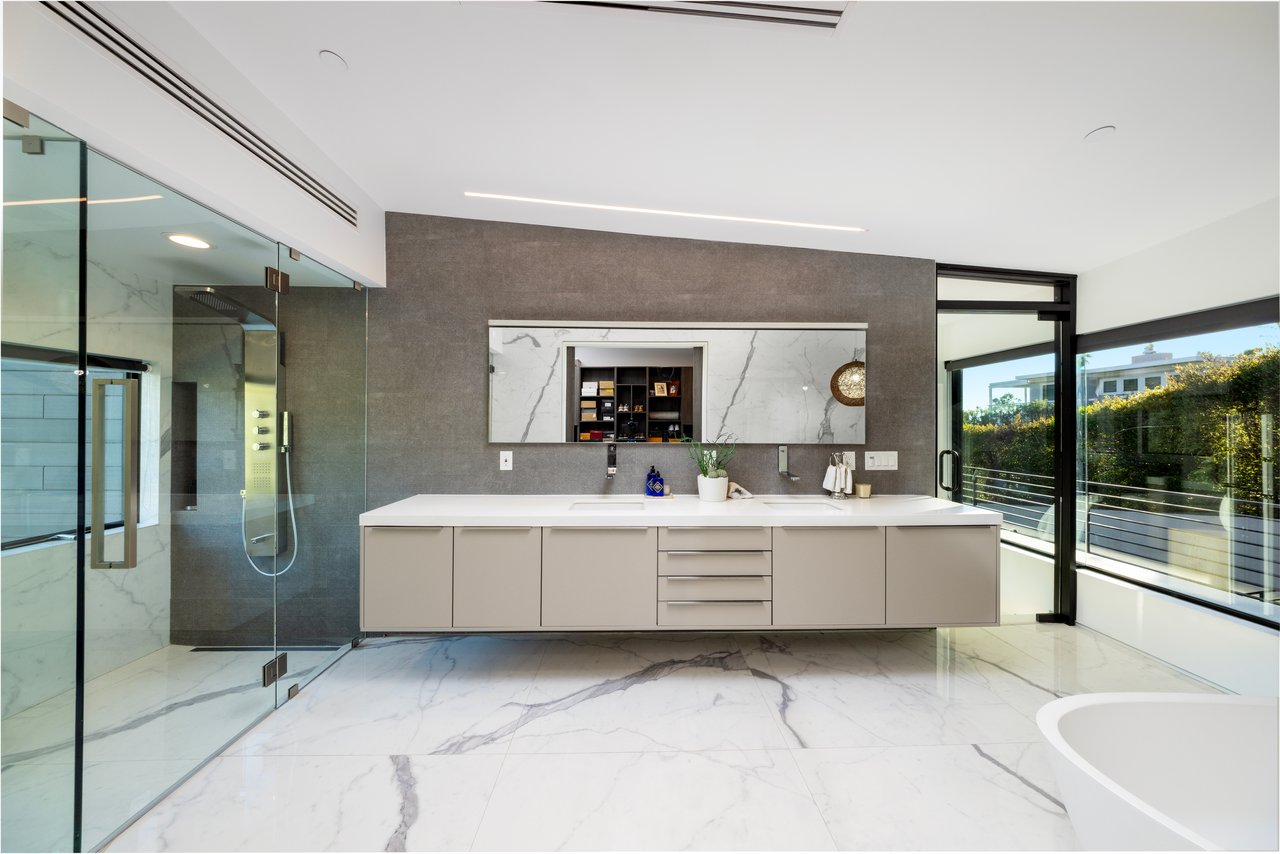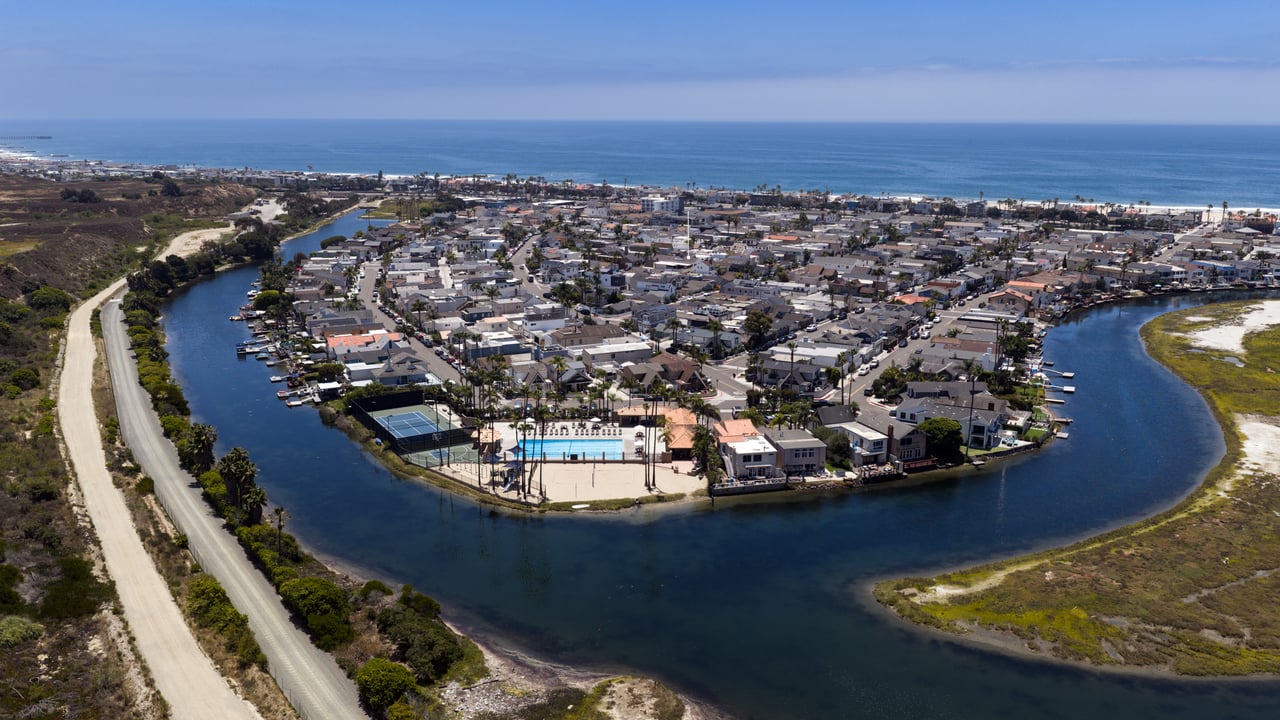
Sustainable Luxury Without Compromise in Corona del Mar and Newport Beach
What does sustainable luxury mean in a Corona del Mar or Newport Beach home?
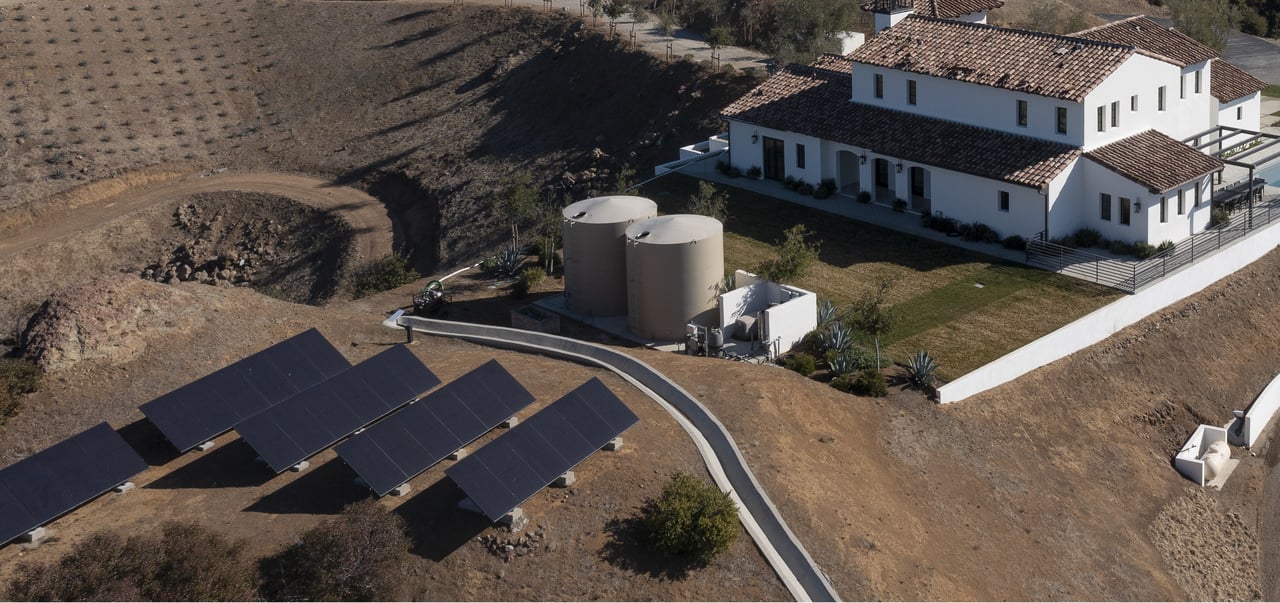
In Corona del Mar and Newport Beach, sustainable luxury means solar and battery storage integrated into the architecture rather than bolted on top of it, high-performance building envelopes that cut energy use without changing how a home feels, and durable, low-impact materials used in place of the finishes that used to signal luxury on their own. The result is a home that performs efficiently and still reads as high-end, with none of the visible trade-offs that used to come with going green.
For years, sustainable and luxury sat on opposite ends of the same conversation. Solar panels looked like an add-on. Energy-efficient windows meant a different look than the original steel or wood frames a coastal Orange County buyer wanted. Water-wise landscaping meant giving up the lush, layered gardens that make the Corona del Mar Village and Newport Beach's waterfront streets feel the way they do.
That trade-off is largely gone. What changed is not buyer sentiment alone. It is what builders, architects, and manufacturers can now deliver at the top of the market, and what California's building code already requires.
Why Sustainability Now Shows Up at the Highest Price Points
California's Title 24 energy code has required solar for most new residential construction since 2020, and the state has continued to raise the bar on building performance with each code cycle since. California's Energy Code has required solar PV on most newly constructed residential buildings since 2020, subject to specific exceptions. The 2025 Energy Code, effective for permit applications submitted on or after January 1, 2026, continues to raise building-performance standards. Remodels and alterations can trigger applicable energy-efficiency requirements, although they do not automatically trigger the solar PV requirement.. Sustainability is not an upgrade a buyer opts into anymore. It is baked into what gets built.
At the same time, coastal ownership costs have become part of the conversation in a way they were not a decade ago. Insurance underwriting, utility costs, and long-term maintenance all factor into how a sophisticated buyer evaluates a property, and a home with a resilient, efficient building envelope is a lower-risk hold than one without.
I am seeing this shift directly in buyer conversations across both markets. Recent buyer activity in Newport Beach already points to a buyer pool that is more deliberate and better informed than it was a few years ago, and questions about solar capacity, battery backup, and building performance now come up as often as questions about square footage or ocean views, particularly from buyers relocating from markets where these features are already the norm.
What Sustainable Luxury Actually Looks Like
The features themselves have changed as much as buyer expectations have. A few examples of what shows up in recent Corona del Mar and Newport Beach listings and remodels:
- Integrated solar and battery storage. Panels set flush with the roofline, paired with battery systems housed out of sight, rather than the visibly mounted panels of a decade ago.
- EV charging built into the garage or motor court, sized for current and future vehicles rather than added as an afterthought.
- High-performance building envelopes, including upgraded insulation, low-emissivity glazing, and tighter construction that reduces energy use without altering the architectural style of the home.
- Water-wise, drought-tolerant landscaping that still reads as lush, using native and adapted plantings, drip irrigation, and smart controllers rather than the water-intensive lawns of an earlier design era.
- Durable, low-impact materials, from reclaimed and FSC-certified wood to low-VOC finishes, chosen because they perform and last, not only because they carry a sustainability label.
None of these require a buyer to accept a smaller footprint, a plainer finish, or a compromised design. That is the actual shift. The features that once signaled a trade-off now sit quietly inside homes that still look and function like Corona del Mar and Newport Beach luxury properties. It is part of a broader shift in what buyers are prioritizing right now, alongside the privacy and wellness features that have become just as central to how luxury buyers evaluate a home.
Where This Matters for Sellers
For a seller, the opportunity is documentation, not renovation. If a Corona del Mar or Newport Beach home already has solar, an efficient envelope, or updated systems, those details belong in the listing, in the marketing, and in the conversation with buyers directly. Buyers increasingly weigh these features into their offer, and a home that can speak clearly to its energy performance and system age has an advantage over one that cannot.
This is also part of a larger positioning question. How a home is initially presented to the market shapes the outcome, and it connects directly to how a home should be priced to protect the seller's equity. Sustainability features are one more data point that helps a serious buyer see the home as well maintained and forward-looking, not just well located.
What This Means for Buyers
If you are buying in Corona del Mar or Newport Beach and sustainability matters to you, the good news is that you no longer have to choose between it and the design, scale, or finish level you want. The better question is not whether a home has these features, but how they were executed. A battery system installed as an afterthought performs differently than one designed into the electrical plan from the start. A landscaping retrofit reads differently than a garden designed around water use from day one.
This is exactly the kind of detail I walk buyers through before we write an offer. It is easy to see solar panels on a roof. It takes more digging to understand system capacity, warranty status, and whether the work was permitted and done to code.
Sustainable Features Are Becoming Part of the Value Conversation
Sustainable luxury in Corona del Mar and Newport Beach is no longer a trade-off between performance and design. The building code, the technology, and buyer expectations have all moved in the same direction, and the result is homes that perform efficiently while still delivering the scale, finish, and setting that define these markets. Whether you are evaluating how to position a home with these features already in place, or looking for a property that gets the balance right, this is exactly the conversation I have with clients before they list or write an offer. Call or text Victor & Suzanne at 949-677-5268.
Frequently Asked Questions
Do luxury homes in Corona del Mar and Newport Beach have solar panels?
Most newly constructed homes do, subject to specific exceptions. Existing homes and remodeled properties may also have solar and battery systems, but a remodel by itself does not automatically trigger California's solar PV requirement.
Does adding sustainable features increase a home's value in Corona del Mar or Newport Beach?
Documented, well-executed features such as solar, battery storage, and an upgraded building envelope give buyers more information to evaluate a home's ongoing cost of ownership, which can support a stronger position during negotiations. The value depends on the quality of the installation and how clearly it is documented, not on the feature alone.
What is the difference between sustainable design and eco-friendly design?
In practice, the terms overlap, but sustainable design in a luxury context typically refers to long-term performance, durability, and resource efficiency built into the architecture and systems, while eco-friendly is often used more loosely to describe materials or products. The distinction matters most when a buyer is comparing what was actually engineered into a home versus what was added on afterward.
Do sustainable features require design compromises in an older Corona del Mar or Newport Beach home?
Not with current technology. Integrated solar, battery systems housed out of sight, and drought-tolerant landscaping that still reads as lush all allow an older or architecturally distinct home to add efficiency without changing its character.
Should I get an energy assessment before listing my Corona del Mar or Newport Beach home?
If your home has solar, updated systems, or an efficient building envelope, having that documented, including system age, capacity, and warranty status, gives buyers clear information and can strengthen how the home is positioned in the market.
About Victor Vasu & Suzanne Vasu
Victor Vasu and Suzanne Vasu are Global Real Estate Advisors with Pacific Sotheby's International Realty, serving coastal Orange County, Corona del Mar, Newport Beach, and Laguna Beach. With 35 years in the market, recognized by the Wall Street Journal for sales volume, and direct experience working with CoreLogic, the nation's largest real estate analytics provider, Victor brings an analytical edge that most agents in this market cannot match. He has represented hedge funds, family offices, and private clients on properties ranging from $3M coastal condominiums to a $30M Lido Isle estate, and has successfully sold over 1,300 expired and cancelled listings that other agents couldn't close. DRE #01015709 & #01002943. Contact him at [email protected] or 949-677-5268.